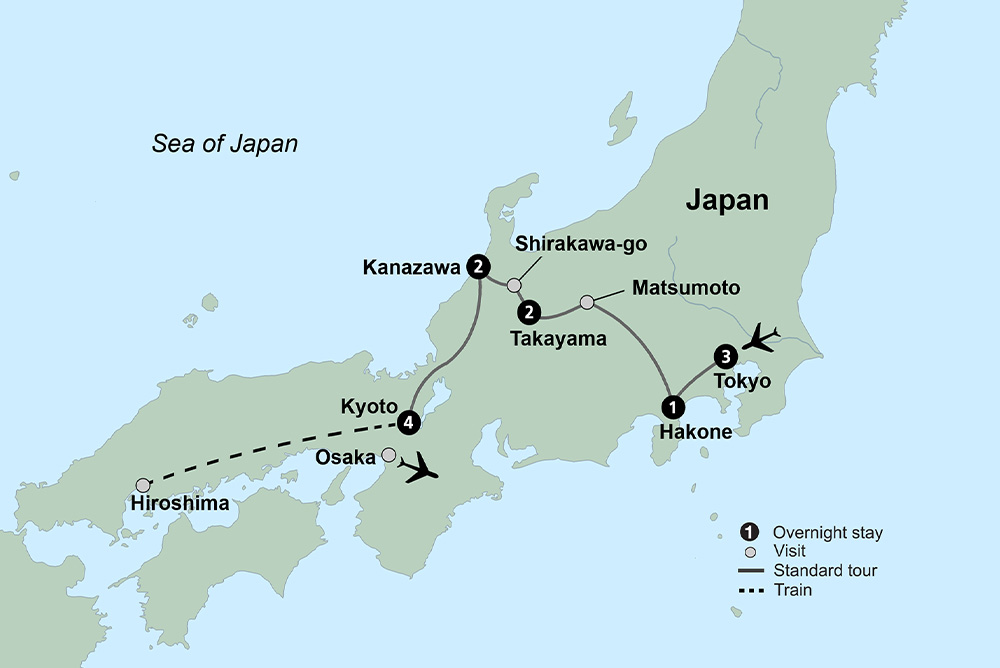
Itinerary Details
Day 1 Overnight Flight
Explore ancient and modern Japanese culture firsthand. Discover peaceful temples and technological marvels set against unimaginable natural beauty.
Day 2 Tokyo, Japan
Welcome to Japan, the “Land of the Rising Sun." Arrive in the electrifying city of Tokyo, where pop culture is turned all the way up and traditions are rich and long-kept. As arrival times will vary, there is no scheduled sightseeing today. Spend the day as you wish, exploring the city independently.
Day 3 Tokyo
Explore the outer grounds of the Imperial Palace, where you’ll see the famed Niju Bridge, the well-known symbol of the Imperial Palace and one of Tokyo’s most recognizable landmarks. Amid a lush forest outside of the city, visit the Meiji Shrine, dedicated to Emperor Meiji and his wife, Empress Shoken. Later, walk through Ginza, one of the most elegant and luxurious streets in the world, where modern landscape meets rich history. Enjoy shopping at some of the most renowned "department stores" in Japan. Tonight, join your fellow travelers at a welcome dinner.(B, D)
Day 4 Tokyo
Begin the day with a visit to the Avatar Robot Café, an innovative café where people who have difficulty leaving their homes or hospital rooms are able to work by remotely operating service robots. Order a drink and take a moment to converse with the robot operators, gaining insight into their daily lives and the technology that helps connect them with the world. Then, head to Tokyo National Museum to learn about the fascinating history and culture of Tokyo. The museum displays artwork and antiques from Japan and the surrounding area. Enjoy free time beginning around 3:30 p.m.(B)
Day 5 Tokyo - Hakone
Journey to the lakeside resort of Hakone, renowned for its hot springs. In the shadow of Mt. Fuji (UNESCO), this scenic town hugs the shorelines of Lake Ashi. Make a stop at Owakudani, located in an active volcanic zone. The Owakudani crater was created some 3,000 years ago, when Mt. Hakone erupted. Climb aboard the Hakone Ropeway, an aerial cable car descending from Owakudani for a breathtaking view* of Mt. Fuji. Next, take to the deep-blue waters of Lake Ashi on a cruise where you’ll see epic views of the local mountains before stopping in the charming town of Moto-Hakone.(B, D)
Day 6 Hakone - Matsumoto - Takayama
This breathtaking day begins in Matsumoto at Matsumoto Castle, known as the “Crow Castle” because of its striking black exterior. Later, you’ll step back in time in the rural Edo-period town of Takayama, nestled in the Japanese Alps and well known to the locals for its connection to sake. Tonight, experience a true Japanese epicurean treat – traditional rice wine paired with a special Hida beef dinner.(B, D)
Day 7 Takayama
The ancient cultures of Takayama come alive during a guided walk in the town’s historic district. Stroll through the morning market, a 600-year-old open air market with locally grown and produced products, located along the Miyagawa River. Circuit the winding streets, where the town’s traditional charms are preserved in the inns and houses. Here, it’s your choice! Choose to glimpse into the past at the 19th-century Takayama Jinya, a former government building -OR- visit the Matsuri Yatai Kaikan and view intricate, traditional, hand-carved floats used in festivals. This afternoon, relish some free time to continue your exploration of Takayama on your own.(B)
Day 8 Takayama - Shirakawa-go - Kanazawa
Today, embrace the unique charms of Shirakawa-go (UNESCO). Hidden away in the mountain, this harmonious village is famous for its gassho-zukuri-style houses – thatched-rooftops designed to resemble two hands joined in prayer. Journey to Kanazawa, the origin of gold-leaf making since the 16th century. Visit the Omicho fish market, and then onto the beauty of Japan’s most stunning gardens, where more than 25 acres of absolute beauty awaits you at Kenroku-En - Garden of Six Qualities. Tonight, enjoy dinner at a local restaurant serving regional specialties.(B, D)
Day 9 Kanazawa
Today, dive into the ancient craft of gold leaf making during a private, hands-on lesson in decorating your own lacquer box! Visit the Geisha quarters of Kanazawa, the Higashi Tea district, before venturing out on your own to really immerse yourself in Kanazawa’s dynamic culture.(B)
Day 10 Kanazawa - Kyoto
Today, Kyoto awaits! The former Imperial capital of Japan is now one of the nation’s top cosmopolitan cities. At the same time, Kyoto’s connection with its past is strong; you won’t need to look far to see one of its 2,000 temples and shrines. After settling into your hotel this afternoon, enjoy a private visit to the Women’s Association of Kyoto in a traditional Kyoto town house. Here, delve into a wide array of enlightening Japanese activities, guided by your knowledgeable hostess. Try your hand at making sushi and learn to fold intricate origami shapes.(B, D)
Day 11 Kyoto
This morning, visit Fushimi Inari Taisha, one of Japan’s most iconic and spiritually significant Shinto shrines (and made famous by the movie Memoirs of a Geisha). Step beneath the first brilliant orange torii gate and follow the winding path as it climbs into the forested hillside. Thousands of torii gates stretch ahead in seemingly endless rows, creating shifting patterns of light and shadow as you walk towards the inner shrine. Along the way, you’ll see worshippers stopping at small altars, offering prayers, waving their personal flags, and leaving tokens of devotion. Enjoy free time beginning around 2:00 p.m. to explore more of Kyoto at leisure.(B)
Day 12 Kyoto - Bullet Train - Hiroshima - Kyoto
All aboard the Shinkansen bullet train to Hiroshima. Upon arrival, board a ferry for the short trip to Miyajima Island, or “Shrine Island” (UNESCO). Afterwards, head into Hiroshima city to visit the Peace Memorial Park, and pause to see the ruined Atomic Dome (UNESCO). Reflect at the Hiroshima Peace Memorial Museum. As this long and moving day comes to a close, return to Kyoto by the Shinkansen bullet train.(B)
Day 13 Kyoto
This morning, spend time with a monk at Koshoji Temple,** where you’ll have the opportunity to chant and meditate with them. Afterwards, take part in the ancient art of the tea ceremony and learn about its importance in Japanese culture. Take this rare opportunity to learn from and speak to the monk about their daily life. This afternoon, spend some time relaxing or set out to explore Kyoto on your own. Fully immerse yourself in Japanese culture tonight during a special farewell dinner and private maiko show.(B, D)
Day 14 Kyoto - Tour Ends
Your tour comes to a close in this fascinating land. As you depart, reflect on its beauty and all you have learned about its rich history and culture.(B)
Day 1 Overnight Flight
Explore ancient and modern Japanese culture firsthand. Discover peaceful temples and technological marvels set against unimaginable natural beauty.
Day 2 Tokyo, Japan
Welcome to Japan, the “Land of the Rising Sun." Arrive in the electrifying city of Tokyo, where pop culture is turned all the way up and traditions are rich and long-kept. As arrival times will vary, there is no scheduled sightseeing today. Spend the day as you wish, exploring the city independently.
Day 3 Tokyo
Explore the outer grounds of the Imperial Palace, where you’ll see the famed Niju Bridge, the well-known symbol of the Imperial Palace and one of Tokyo’s most recognizable landmarks. Amid a lush forest outside of the city, visit the Meiji Shrine, dedicated to Emperor Meiji and his wife, Empress Shoken. Later, walk through Ginza, one of the most elegant and luxurious streets in the world, where modern landscape meets rich history. Enjoy shopping at some of the most renowned "department stores" in Japan. Tonight, join your fellow travelers at a welcome dinner.(B, D)
Day 4 Tokyo
Begin the day with a visit to the Avatar Robot Café, an innovative café where people who have difficulty leaving their homes or hospital rooms are able to work by remotely operating service robots. Order a drink and take a moment to converse with the robot operators, gaining insight into their daily lives and the technology that helps connect them with the world. Then, head to Tokyo National Museum to learn about the fascinating history and culture of Tokyo. The museum displays artwork and antiques from Japan and the surrounding area. Enjoy free time beginning around 3:30 p.m.(B)
Day 5 Tokyo - Hakone
Journey to the lakeside resort of Hakone, renowned for its hot springs. In the shadow of Mt. Fuji (UNESCO), this scenic town hugs the shorelines of Lake Ashi. Make a stop at Owakudani, located in an active volcanic zone. The Owakudani crater was created some 3,000 years ago, when Mt. Hakone erupted. Climb aboard the Hakone Ropeway, an aerial cable car descending from Owakudani for a breathtaking view* of Mt. Fuji. Next, take to the deep-blue waters of Lake Ashi on a cruise where you’ll see epic views of the local mountains before stopping in the charming town of Moto-Hakone.(B, D)
Day 6 Hakone - Matsumoto - Takayama
This breathtaking day begins in Matsumoto at Matsumoto Castle, known as the “Crow Castle” because of its striking black exterior. Later, you’ll step back in time in the rural Edo-period town of Takayama, nestled in the Japanese Alps and well known to the locals for its connection to sake. Tonight, experience a true Japanese epicurean treat – traditional rice wine paired with a special Hida beef dinner.(B, D)
Day 7 Takayama
The ancient cultures of Takayama come alive during a guided walk in the town’s historic district. Stroll through the morning market, a 600-year-old open air market with locally grown and produced products, located along the Miyagawa River. Circuit the winding streets, where the town’s traditional charms are preserved in the inns and houses. Here, it’s your choice! Choose to glimpse into the past at the 19th-century Takayama Jinya, a former government building -OR- visit the Matsuri Yatai Kaikan and view intricate, traditional, hand-carved floats used in festivals. This afternoon, relish some free time to continue your exploration of Takayama on your own.(B)
Day 8 Takayama - Shirakawa-go - Kanazawa
Today, embrace the unique charms of Shirakawa-go (UNESCO). Hidden away in the mountain, this harmonious village is famous for its gassho-zukuri-style houses – thatched-rooftops designed to resemble two hands joined in prayer. Journey to Kanazawa, the origin of gold-leaf making since the 16th century. Visit the Omicho fish market, and then onto the beauty of Japan’s most stunning gardens, where more than 25 acres of absolute beauty awaits you at Kenroku-En - Garden of Six Qualities. Tonight, enjoy dinner at a local restaurant serving regional specialties.(B, D)
Day 9 Kanazawa
Today, dive into the ancient craft of gold leaf making during a private, hands-on lesson in decorating your own lacquer box! Visit the Geisha quarters of Kanazawa, the Higashi Tea district, before venturing out on your own to really immerse yourself in Kanazawa’s dynamic culture.(B)
Day 10 Kanazawa - Kyoto
Today, Kyoto awaits! The former Imperial capital of Japan is now one of the nation’s top cosmopolitan cities. At the same time, Kyoto’s connection with its past is strong; you won’t need to look far to see one of its 2,000 temples and shrines. After settling into your hotel this afternoon, enjoy a private visit to the Women’s Association of Kyoto in a traditional Kyoto town house. Here, delve into a wide array of enlightening Japanese activities, guided by your knowledgeable hostess. Try your hand at making sushi and learn to fold intricate origami shapes.(B, D)
Day 11 Kyoto
This morning, visit Fushimi Inari Taisha, one of Japan’s most iconic and spiritually significant Shinto shrines (and made famous by the movie Memoirs of a Geisha). Step beneath the first brilliant orange torii gate and follow the winding path as it climbs into the forested hillside. Thousands of torii gates stretch ahead in seemingly endless rows, creating shifting patterns of light and shadow as you walk towards the inner shrine. Along the way, you’ll see worshippers stopping at small altars, offering prayers, waving their personal flags, and leaving tokens of devotion. Enjoy free time beginning around 2:00 p.m. to explore more of Kyoto at leisure.(B)
Day 12 Kyoto - Bullet Train - Hiroshima - Kyoto
All aboard the Shinkansen bullet train to Hiroshima. Upon arrival, board a ferry for the short trip to Miyajima Island, or “Shrine Island” (UNESCO). Afterwards, head into Hiroshima city to visit the Peace Memorial Park, and pause to see the ruined Atomic Dome (UNESCO). Reflect at the Hiroshima Peace Memorial Museum. As this long and moving day comes to a close, return to Kyoto by the Shinkansen bullet train.(B)
Day 13 Kyoto
This morning, spend time with a monk at Koshoji Temple,** where you’ll have the opportunity to chant and meditate with them. Afterwards, take part in the ancient art of the tea ceremony and learn about its importance in Japanese culture. Take this rare opportunity to learn from and speak to the monk about their daily life. This afternoon, spend some time relaxing or set out to explore Kyoto on your own. Fully immerse yourself in Japanese culture tonight during a special farewell dinner and private maiko show.(B, D)
Day 14 Kyoto - Tour Ends
Your tour comes to a close in this fascinating land. As you depart, reflect on its beauty and all you have learned about its rich history and culture.(B)